

Buck moth caterpillars are spiny, stinging caterpillars that swarm New Orleans live oaks each spring, usually from March through May. Their venomous spines cause a painful, burning sting. They rarely kill a healthy oak, but they can strip its leaves and make a yard hard to use. Keeping trees healthy and treating heavy infestations is the best protection.
- Active in spring, usually March through May
- Feed mainly on live oaks
- Spines deliver a painful, venomous sting
- Rarely fatal to a healthy oak, but can defoliate it
- Managed with professional treatment and tree health care
- Get medical help for a severe reaction
If you live in New Orleans, you know spring brings more than warm weather. It brings buck moth caterpillars, the spiny black-and-orange caterpillars that drop from live oaks and deliver a sting nobody forgets. Here is what they are and how to keep them from taking over your yard.
What Are Buck Moth Caterpillars?
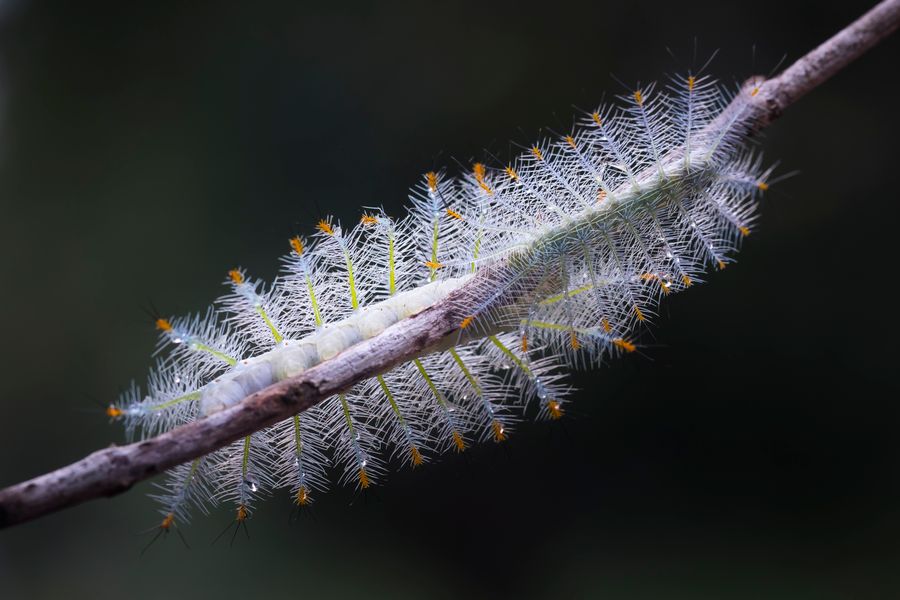
Buck moth caterpillars are the larvae of the buck moth. They are dark with branching spines and lighter speckling, and they feed in groups on live oak leaves. In the New Orleans area they are most active in spring, generally March through May, before they move to the ground to pupate. Live oaks are their favorite host, which is why they are so common here.
The Buck Moth Life Cycle
The life cycle explains why these caterpillars arrive on the same schedule every year. In the fall, female buck moths lay rings of eggs around the twigs of live oaks, high in the canopy where you would never notice them. The eggs wait out the winter. As the oaks push fresh leaves in late winter and early spring, they hatch and the young caterpillars feed together in clusters, growing through several stages over roughly five to six weeks and getting larger and spinier as they go.
By late spring the mature caterpillars crawl down the trunk or drop to the ground, where they burrow into soil and leaf litter to pupate through the summer. Adult buck moths emerge and fly in the fall, mate, and lay the next round of eggs on oak twigs, and the cycle repeats. Because the eggs are set by winter, next spring’s crop is decided months before you see a single caterpillar.
Why New Orleans Sees So Many
New Orleans is covered in live oaks, from Uptown streets to City Park and front yards across the city. Buck moth caterpillars feed almost entirely on live oak, so a city built around this one tree gives them nearly unlimited food. Mild winters let the eggs survive easily, and the dense, connected canopy lets the moths spread quickly. That makes buck moths a citywide seasonal problem rather than a one-yard nuisance. Even if you treat your own oak, caterpillars can drift in from neighboring trees, so timing and repeat attention both matter.
How to Identify a Buck Moth Caterpillar
Not every caterpillar on your oak stings, so it helps to know what you are looking at. Mature buck moth caterpillars are usually one to two inches long and dark, from reddish brown to nearly black, with fine light speckles along the body. The giveaway is the rows of branching, spiky bristles on every segment. They feed in clusters too, so you often see many together on a branch or trunk rather than one loner.
Watch for look-alikes. Tent caterpillars build silk webs in tree forks and carry no stinging spines, and smooth or fuzzy caterpillars without stiff, branching bristles are almost never buck moths. If a caterpillar is covered in rigid spikes, sits on a live oak, and travels with a group in spring, treat it as a buck moth and keep your hands off it.
Why the Sting Hurts
Those spines are hollow and connected to venom glands. Brush against one and it injects venom that causes an immediate burning sting, redness, and swelling that can last for hours. For most people it is painful but not dangerous. Anyone with a severe reaction, or a sting near the eyes, should seek medical care.
What to Do If You Get Stung
Lift out any spines stuck in the skin with tape, wash the area with soap and water, and apply ice to ease the burning. Over-the-counter remedies for itching and swelling can help. Watch for signs of a serious allergic reaction and get medical help if they appear.
The Damage They Do to Oaks
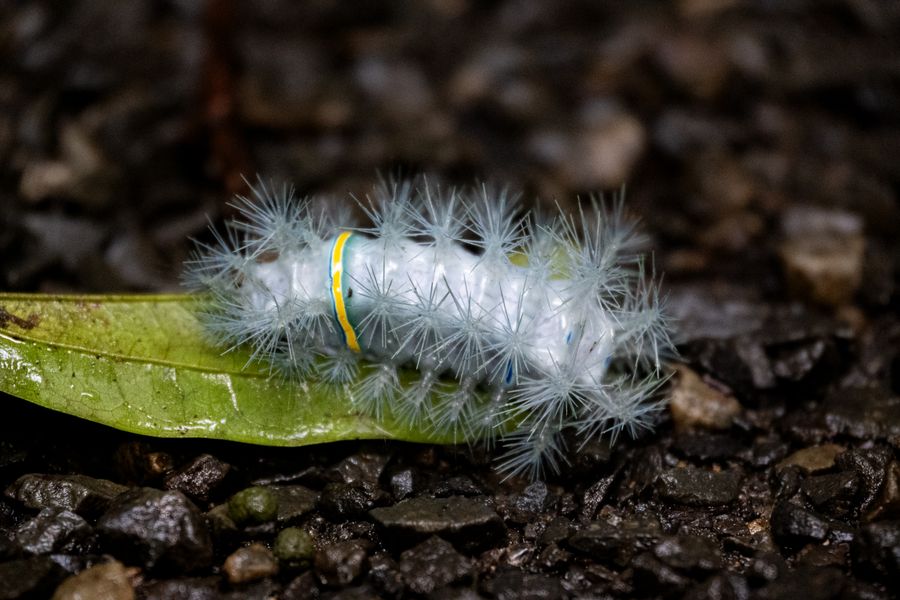
A heavy infestation can defoliate a live oak, stripping much of its canopy in a few weeks. A healthy, established oak usually recovers and pushes out new leaves, so the caterpillars are rarely fatal on their own. The bigger problems are the stings and the mess, and the added stress on a tree that is already struggling for other reasons.
Prevention and Control Options
No single trick clears buck moths for good, but a few approaches used together make a real difference. Our disease and pest control service can put these steps on the right schedule for your oaks.
Time Treatment to the Young Caterpillars
Treatments work best early, when the caterpillars are small and still feeding in the canopy. Once they mature and drop to the ground, spraying does little. That narrow window is why professional timing matters, and a tree service tracking the local hatch can treat at the right moment instead of guessing.
Deal With Egg Masses in Winter
Because the eggs sit in rings on the twigs all winter, pruning out reachable egg-bearing branches during the dormant season removes next spring’s caterpillars before they hatch. On a large oak most eggs are out of reach, so this helps most on smaller and younger trees, where careful tree trimming can remove low egg-laden twigs safely.
Keep the Oak Healthy
A vigorous oak tolerates a hard year of feeding and grows its leaves back without lasting harm. Watering during dry spells, sound structure, and steady soil health all help it recover. Our tree preservation service keeps oaks strong enough to shrug off a heavy caterpillar year.
The city has run buck moth spraying in some years, but coverage changes year to year, so you cannot count on it for your own trees. Treating your property directly is the reliable option.
Protecting Kids and Pets During Caterpillar Season
Spring is when kids and pets are back outside, exactly when the caterpillars are at their worst. Check play areas, patios, and the base of your oaks before anyone spends time there, since mature caterpillars crawl along the ground and rest on low bark and furniture. Teach kids to leave any spiny caterpillar alone, and hose off the ones you find on porches and railings. Dogs and cats can get stung on the nose or paws, so keep them away from ground clusters and call your vet if a pet reacts strongly.
Take Back Your Oaks This Spring
If buck moth caterpillars take over your live oaks every year, we can help you get ahead of them. TurnKey Tree Removal offers free estimates across New Orleans. Call (504) 565-2705 or request a free estimate.
Frequently Asked Questions
When are buck moth caterpillars active in New Orleans?
Mostly in spring, generally March through May. They feed on live oaks for several weeks before dropping to the ground to pupate.
What do you do if a buck moth caterpillar stings you?
Remove any spines with tape, wash the area with soap and water, and apply ice for the burning. Seek medical care for a severe reaction or a sting near the eyes.
Do buck moth caterpillars kill oak trees?
Rarely. A healthy live oak usually recovers from being defoliated and grows new leaves. The main issues are the painful stings and the added stress on an already weak tree.
How do I get rid of buck moth caterpillars?
Professional treatment timed to the caterpillar\’s life cycle is the most effective approach, combined with keeping the oak healthy so it tolerates the feeding. A tree care company can set this up.
Are buck moth caterpillars dangerous to pets?
A sting can hurt a curious pet just as it does a person. Keep dogs and cats away from swarms on the ground, and see a vet if your pet has a strong reaction.