DIY vs. Professional Tree Trimming: What New Orleans Homeowners Should Know
For small branches you can safely reach from the ground with hand tools, careful DIY trimming is fine. Anything that needs a ladder or chainsaw overhead, sits near power lines, or involves a large tree is a job for a licensed professional with the training, insurance, and equipment to do it safely. In New Orleans, where live oaks and storm-prone limbs are common, a wrong cut can injure you or permanently harm the tree.
Keeping your trees trimmed protects your home, your family, and the health of the trees themselves. The hard part is knowing which jobs you can safely handle with a pair of loppers and which ones belong to a trained crew. This guide breaks down where DIY trimming makes sense, when to call a professional, and the real risks of getting it wrong in a city full of towering live oaks.
What Tree Trimming Actually Does
Trimming is more than tidying up a tree’s shape. Done well, it clears branches away from your roof, windows, and power lines, removes dead or weak limbs before they fall, improves airflow and light through the canopy, and keeps the tree structurally sound. Done badly, it stresses the tree, invites disease through sloppy cuts, and can even make a tree more dangerous in a storm.
When DIY Tree Trimming Is Fine

Plenty of light trimming is well within a careful homeowner’s reach. You can safely handle the job yourself when it involves small branches you can reach while standing on the ground, young or small trees, and simple hand tools like pruners, loppers, or a pole saw.
Good DIY candidates include snipping back a low limb that brushes the walkway, removing a small dead branch you can reach, and shaping a young ornamental tree. The rule of thumb is simple: if you need both feet off the ground or a chainsaw above your shoulders, stop and call a pro.
When You Should Call a Professional
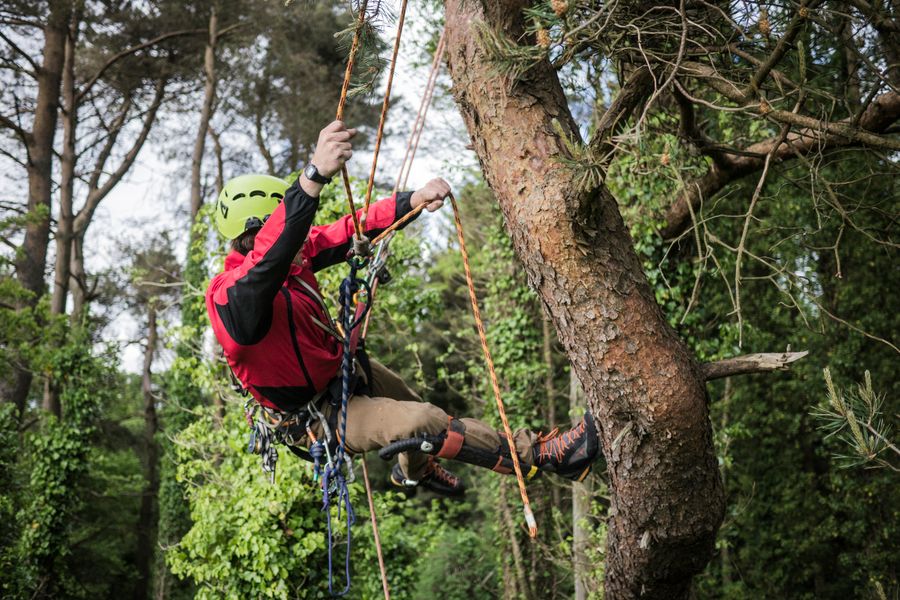
Some jobs are simply too risky or too technical for a weekend project. Call a licensed professional when the work involves a large or tall tree, branches near or touching power lines, storm-damaged or hanging limbs, anything that requires climbing or a bucket truck, or large cuts on a mature tree like a live oak.
A professional does more than reach high branches. They know how much canopy a tree can lose safely, where to make a cut so it heals cleanly, and how to lower heavy limbs without dropping them on your roof. For valuable mature trees, that expertise is what keeps a trim from turning into a slow decline.
The Risks of DIY Tree Trimming
Tree work sends thousands of people to the emergency room every year, and it is not hard to see why. The most common dangers include:
- Falls from ladders or the tree itself, which cause the most serious injuries
- Chainsaw kickback and cuts, especially when working overhead or off balance
- Contact with power lines hidden in the canopy
- Heavy limbs falling onto your home, car, fence, or a person below
- Harming the tree through topping or over-pruning, which can be fatal to it over time
That last point surprises people. Removing too much of the canopy at once, or topping a tree by cutting the main branches back to stubs, starves the tree and leaves it open to decay. A tree can survive a bad haircut, but it often never fully recovers.
How Professionals Trim Trees Safely
A trained crew follows a clear process. They assess the tree’s structure and surroundings first, identify any hazards like power lines or weak unions, then use climbing gear, ropes, or a bucket truck to reach the work safely. Cuts are made at the right spot to protect the branch collar so the wound seals properly, and heavy limbs are rigged and lowered rather than dropped. When the job is done, the crew clears the debris and hauls it away.
Trimming and Hurricane Season in New Orleans
In our climate, smart trimming is also storm protection. Thinning a dense canopy lets wind pass through instead of pushing against a solid wall of leaves, and removing dead or weak limbs takes away the pieces most likely to break off and cause damage. The catch is that over-thinning or topping does the opposite, weakening the tree and encouraging weak regrowth that fails in the next big blow. Proper, measured trimming by someone who understands local trees is the goal.
DIY vs. Professional: A Quick Comparison
| Factor | DIY | Professional |
|---|---|---|
| Best for | Small, low branches on young trees | Large, tall, or risky trees |
| Tools | Hand pruners, loppers, pole saw | Climbing gear, bucket truck, rigging |
| Safety | You take on all the risk | Trained, insured crew |
| Tree health | Easy to over-cut by accident | Proper cuts that heal cleanly |
| Cleanup | Your job | Included in the service |
Need Expert Tree Trimming in New Orleans?
If a job is too big, too high, or too close to power lines, let a licensed crew handle it. TurnKey Tree Removal offers professional tree trimming and full tree removal across New Orleans and nearby parishes, with free estimates. Call (504) 565-2705 or request a free estimate today.
Frequently Asked Questions
Is it safe to trim your own trees?
Small, low branches you can reach from the ground with hand tools are usually fine for a careful homeowner. Anything that needs a ladder, a chainsaw overhead, or work near power lines should go to a professional, since falls and kickback cause serious injuries every year.
When should you hire a professional tree trimmer?
Hire a pro for large or tall trees, branches near power lines or structures, storm-damaged limbs, and any job that needs climbing or a chainsaw above shoulder height. Professionals are trained, insured, and equipped for the risk.
Can bad trimming kill a tree?
Yes. Over-pruning, topping, or cutting at the wrong time can stress or kill a tree by removing too much canopy and inviting decay. Removing more than about a quarter of the canopy at once is risky.
How do you know if a tree needs trimming?
Watch for branches rubbing or crossing, limbs hanging over the roof or power lines, dead or broken branches, and a canopy so dense it blocks light and air. A professional can also spot structural weak points you might miss.
Does trimming help a tree survive a hurricane?
Proper thinning lets wind pass through the canopy and removes weak limbs that could break off, which helps a tree hold up. Over-thinning or topping does the opposite and makes the tree more vulnerable, so measured, professional trimming is best.